
Whereas the national homicide rate has steadily decreased in the past decade (from 23,523 in 2003 to 14,594 in 2012), the number of stray bullet incidents increased until 2010 – when it peaked – before significantly coming back down in the past three years
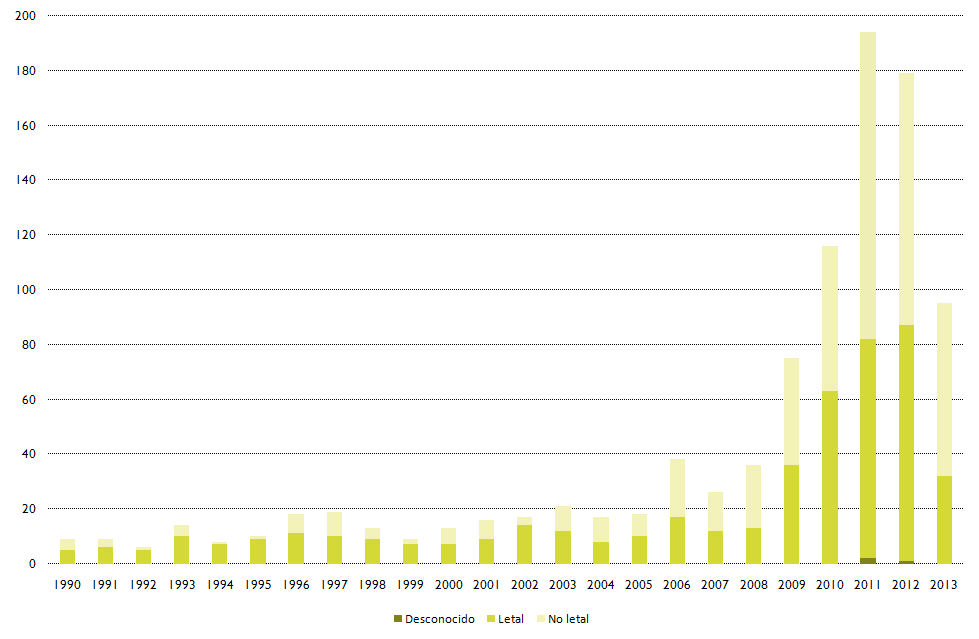
Graph 1. Lethality of stray bullets between 1990 and 2013 (as compiled by CERAC)
Source: The Colombian stray bullet database by CERAC
|
The Deadly Injustice of Stray Bullets A closer look at the data shows how deadly unjust stray bullets can be. Affecting men and women, old and young alike in equal measure, stray bullets show no favorites and spare none: neither age nor gender offer cover of any sort. |
Since 1990, men have accounted for 61% (1814) of registered victims of stray bullets, and women 38% (1124). In the course of 2013, however, women were struck by stray bullets on 55 occasions (58%), compared to 39 for men (41%). This represents a 9.2% increase on the percentage of women affected in 2012 and a 7% decrease for men. Compare this with the fact that, on average, women only account for 8% of homicides in Colombia per year.
Minors’ general inability to protect themselves is thought to be one of the principle factors behind their vulnerability to stray bullets. Since 1990, they have been the victims in 35% (1095) of stray bullet cases on record. In 2013, they accounted for 49% of victims (47 cases), a 30% decrease on the percentage of minors who were victimized the previous year (not sure what we mean by victimized in this case).
According to records of the past 23 years, the largest concentration of victims, whether lethal or not, has been in the 10-19 and 20-29 age groups
Graph 2 shows stray bullet victims, whether lethal or not, as divided by age since 1990. As previously mentioned, those between 10 and 29 years of age have been the primary victims of stray bullets during this period.
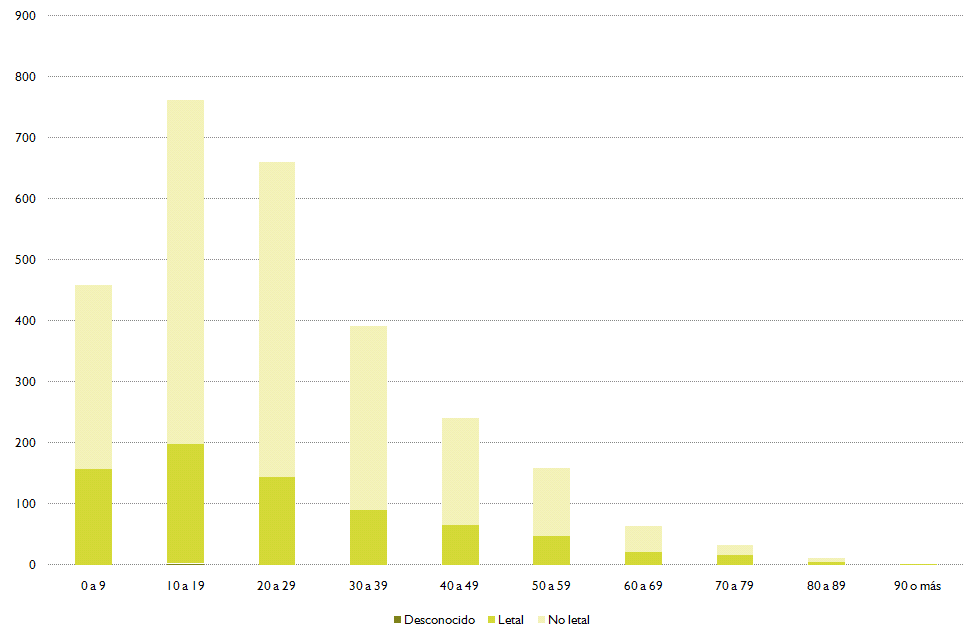
Graph 2. Victims of stray bullets by age group
Source: The Colombian stray bullet database by CERAC, integrated with National Police database
